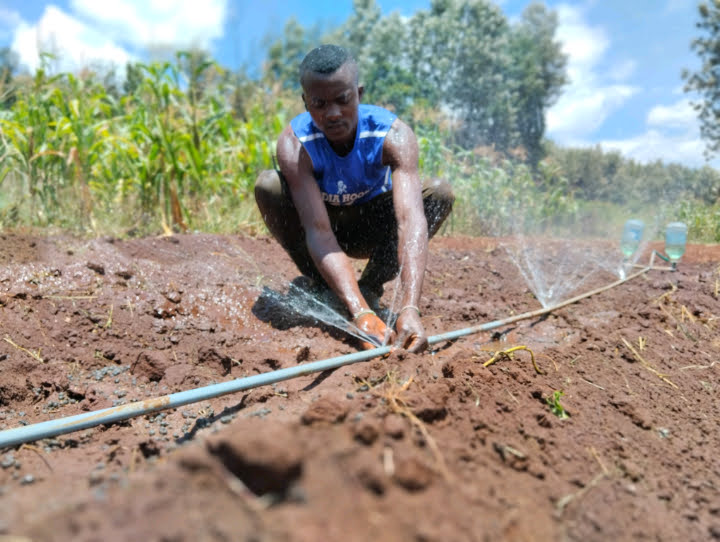
Climate change is one of the most significant challenges of our time, with profound impacts on every aspect of life, especially agriculture. In Kenya, where 75% of the population relies on farming for their livelihoods, the stakes couldn’t be higher. At Charlie Young Foundation, we recognize the critical intersection between climate change and agriculture and are committed to building resilience through sustainable practices.
The Impact of Climate Change on Agriculture
The effects of climate change on agriculture are far-reaching:
- Unpredictable Weather Patterns: Prolonged droughts, erratic rainfall, and extreme weather events disrupt planting and harvesting cycles, reducing crop yields.
- Soil Degradation: Rising temperatures and poor land management practices accelerate soil erosion, nutrient depletion, and loss of organic matter.
- Water Scarcity: Droughts and inefficient water usage strain agricultural production, especially in arid and semi-arid regions.
- Pest and Disease Outbreaks: Warmer climates create favorable conditions for pests and diseases, threatening crops and livestock.
A Climate-Smart Agriculture Approach
At Charlie Young Foundation, we take a proactive approach to combat climate change through climate-smart agriculture. Our initiatives are designed to mitigate the effects of climate change while enhancing agricultural productivity and sustainability.
- Promoting Climate-Resilient Crops We work with farmers to identify and grow drought-tolerant and pest-resistant crops. These crops are better suited to withstand extreme weather conditions, ensuring food security even in the face of adversity.
- Efficient Water Management Implementing water-saving technologies, such as drip irrigation and rainwater harvesting, helps farmers optimize water use. These systems reduce dependency on rainfall and ensure that crops receive adequate hydration during dry spells.
- Soil Conservation Techniques Healthy soil is the foundation of agriculture. We encourage practices like crop rotation, cover cropping, and agroforestry to restore soil fertility, prevent erosion, and improve organic matter content.
- Sustainable Livestock Management Livestock farming contributes to greenhouse gas emissions, but sustainable practices can minimize this impact. We educate farmers on rotational grazing, feed efficiency, and waste management to reduce emissions and improve productivity.
Empowering Communities to Adapt
The success of climate-smart agriculture depends on the people who implement it. That’s why we prioritize community empowerment:
- Training Programs: We offer workshops and on-farm demonstrations to teach farmers about climate adaptation strategies and sustainable practices.
- Youth Engagement: By making agriculture attractive to the younger generation, we create a new wave of innovators who view farming as a viable and rewarding career.
- Access to Technology: Providing tools like mobile apps for weather forecasts and market access platforms ensures that farmers make informed decisions.
Restoring Ecosystems for Resilience
Climate change exacerbates the degradation of ecosystems, but agriculture can also be a solution. Our initiatives include:
- Agroforestry: Integrating trees into farming systems enhances biodiversity, improves soil health, and sequesters carbon.
- Urban Gardening: Encouraging city dwellers to grow food reduces reliance on rural farms, easing pressure on natural resources.
- Rehabilitation of Degraded Lands: We work with communities to restore overused lands, turning them back into productive agricultural spaces.
A Call to Action
Climate change is a shared challenge that requires collective action. The Charlie Young Foundation is committed to leading the way in Kenya by demonstrating that sustainable agriculture can be both a solution to climate change and a pathway to prosperity. However, we cannot do it alone. We call on:
- Farmers to embrace climate-smart practices and join our training programs.
- Youth to step into the agricultural sector and drive innovation.
- Partners to collaborate with us in scaling our initiatives and reaching more communities.
Hope for the Future
Despite the challenges, agriculture has the potential to be a powerful ally in the fight against climate change. With the right practices, education, and community support, we can transform agriculture into a sustainable and resilient sector that not only feeds the population but also nurtures the planet. At Charlie Young Foundation, we’re sowing the seeds of change—one farm, one family, and one community at a time.
Join us as we cultivate ideas for growth and build a climate-resilient future.